
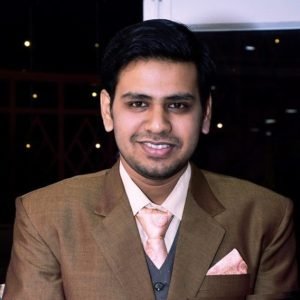
Mr. Ankur Saxena
DGM, Content Operations and Delivery, Coschool, India
About speaker
Ankur Saxena is DGM, Operations and AI Strategy at Coschool, Hyderabad, where he leads product operations and enterprise generative AI workflows. With over 13 years of experience in operations and product leadership, he designed a generative AI production pipeline at Coschool that increased assessment production tenfold while reducing production costs by 30% with no increase in headcount. He specializes in human-in-the-loop AI systems that cut turnaround times without compromising quality, and has led cross-functional teams of more than 45 professionals across technology, product, content, quality and media. Earlier in his career he held roles at ByteDance (Snapsolve) and Bartleby.
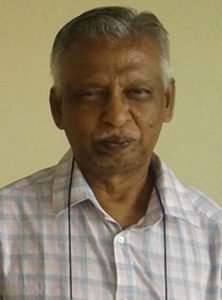
Dr. Arumugam S.
Adjunct Professor, Kalasalingam University
Graph Theory, Graph Domination, Graph labelings and Combinatorial optimization.
About speaker
Prof. Subramanian Arumugam is Honorary Professor of Eminence at Ramanujan College, New Delhi, and one of India's leading graph theorists. He was previously Founder Professor and Head of the Department of Mathematics at Manonmaniam Sundaranar University and Senior Professor and Director of the National Centre for Advanced Research in Discrete Mathematics at Kalasalingam Academy of Research and Education. His research focuses on graph theory and its applications, including domination, graph labelings and combinatorial optimization. He is the founding Editor-in-Chief of the AKCE International Journal of Graphs and Combinatorics, a co-editor of the Handbook of Graph Theory, Combinatorial Optimization, and Algorithms, and the author of more than 30 books, along with many research papers. He has been a visiting professor at Liverpool Hope University and an adjunct professor at Ball State University, and has supervised many PhD scholars.
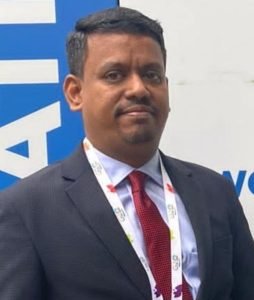
Dr. Arun Kumar Ganesan
Assistant Professor, Department of Mathematics, IIT Madras
Infinite-dimensional Lie algebras, Algebraic combinatorics,
About speaker
Dr. Arunkumar Ganesan is an Assistant Professor in the Department of Mathematics at the Indian Institute of Technology Madras. His research is in infinite-dimensional Lie algebras and algebraic combinatorics, with a particular interest in the links between graphs and algebra. His work includes chromatic polynomials and symmetric functions of graphs arising from Borcherds algebras, graphs defined on groups and rings such as super graphs and zero-divisor graphs, and the spectral properties of graphs. He has published in journals including the Journal of Combinatorial Theory, Series A, Journal of Algebra, Discrete Mathematics and Annals of Combinatorics, and collaborates with researchers in India and abroad.
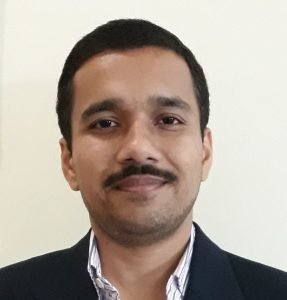
Dr. Asit Saha
Professor, SMIT, SMU, Sikkim, India
Nonlinear Wave Phenomena in Plasmas & Elastic Rods, Pulses in Transmission Lines, Bifurcation and Chaos
About speaker
Dr. Asit Saha is currently working as a Professor in the Department of Computer Science and Engineering, Sikkim Manipal Institute of Technology, Sikkim Manipal University, Sikkim, India. He published more than 140 research articles with reputed international journals. His research areas cover mainly bifurcation, chaotic, and multistability behaviors of nonlinear waves in plasmas, elastic rods and transmission lines. He published one book entitled “Dynamical systems and nonlinear waves in plasmas” with CRC Press in 2021 jointly with Prof. Santo Banerjee. He also jointly published four edited books with Springer (Scopus Indexed). He is known as the first to apply the theory of planar dynamical systems in plasma waves. His other interest is to employ the concept of nonlinear dynamics in different areas of physical problems. He is also serving as Editors for three reputed international journals “The European Physical Journal Plus (EPJ Plus, Springer, Q2, SCIE)”, International Journal of Antennas and Propagation (SCIE, Scopus, Wiley) and Discover Applied Mathematics (Springer). He was enlisted in Stanford University’s top 2% most Influential scientists’ list for six consecutive years 2020, 2021, 2022, 2023, 2024 & 2025. Four scholars were awarded with Ph.D. degrees and 7 scholars are currently working under his guidance. One post-doctoral fellow has completed his research works under his mentorship during the period July 2023-June 2026. Another post-doctoral fellow has been doing research works under his mentorship since May 2026. He edited one topical issue “Dynamics of Nonlinear Waves in Space Plasmas” with the journal “Discover Space” (Springer, Scopus, Q2, SCIE)
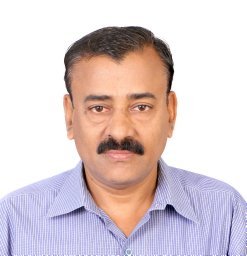
Dr. Balasubramaniam P.
Senior Professor, Department of Mathematics, Gandhigram Rural Institute (GRU)
Control theory, Stochastic differential equations, Stability analysis, Soft computing, Artificial intelligence, Machine learning, Cryptography and quantum computing.
About speaker
Prof. P. Balasubramaniam is Senior Professor of Mathematics at The Gandhigram Rural Institute (Deemed to be University), Tamil Nadu, where he is also Director of the Centre for Mathematical Modelling and Quantum Computing and Dean of the School of Sciences. His research covers control theory, stochastic differential equations, stability analysis, soft computing, artificial intelligence, machine learning, cryptography and quantum computing. He holds a PhD in Mathematics (Control Theory) from Bharathiar University and a D.Sc. from Gandhigram Rural Institute. He has published more than 280 papers in SCI/SCIE journals, supervised 37 PhD scholars, and served as Registrar of his university and as Head of its Department of Mathematics. He has been a visiting professor in South Korea and Malaysia and is on Stanford University's list of the world's top 2% scientists. His honours include the Tamil Nadu Scientist Award (2005) and the Tamil Nadu Senior Scientist Award (2018).
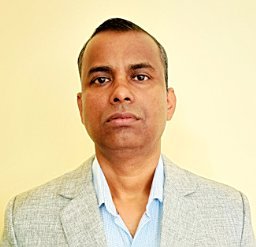
Dr. Biswajit Deb
Associate Professor, Department of Mathematics, BSSRV, Golaghat, Assam
Graph Theory and Combinatorics, Linear Algebra, Graph Characterisation,
About speaker
Dr. Biswajit Deb is an Associate Professor of Mathematics at Birangana Sati Sadhani Rajyik Vishwavidyalaya (BSSRV), Golaghat, Assam. His research is in graph theory, including domination in graphs, spectral graph theory, graph characterization and motion planning in graphs, along with emerging applications of graph theory to graph neural networks. He holds a PhD in Mathematics from IIT Guwahati, and has more than 24 years of teaching experience, including over two decades at Sikkim Manipal Institute of Technology. He has published in peer-reviewed journals, guided PhD scholars, and contributed to undergraduate curriculum development under NEP 2020, with an interest in bringing Python and data science into mathematics teaching.
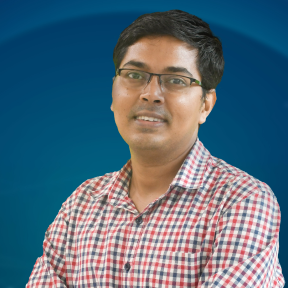
Dr. Chandrashekar Lakshminarayanan
Assistant Professor, Department of Computer Science and Engineering, IIT Madras
Deep Learning, Reinforcement Learning, Stochastic Approximation and Large Scale Markov Decision Processes
About speaker
Dr. Chandrashekar Lakshminarayanan is an Assistant Professor in the Department of Computer Science and Engineering at IIT Madras. His research focuses on deep learning, reinforcement learning, stochastic approximation and large-scale Markov decision processes. He has published at venues including NeurIPS, AISTATS, AAAI, IEEE Transactions on Automatic Control and Automatica, including work on how gates shape learning in deep networks. Before joining IIT Madras in 2021, he was an Assistant Professor at IIT Palakkad, a research scientist at Google DeepMind in London, and a postdoctoral fellow at the University of Alberta. He holds an MS and PhD from the Indian Institute of Science and a B.Tech from NIT Tiruchirappalli.
Dr. Christy Jackson Joshua
Lecturer, School of Computing, Engineering and Physical Sciences, University of the West of Scotland, London
Evolutionary computation, Artificial intelligence and Machine learning, Vehicular Ad hoc networks, Cyber-physical systems
About speaker
Dr. Christy Jackson Joshua is a Lecturer in the School of Computing, Engineering and Physical Sciences at the University of the West of Scotland, London. He has over 13 years of combined experience across industry, teaching and research, and was previously an Associate Professor in the School of Computer Science and Engineering at Vellore Institute of Technology (VIT), Chennai, where he also served as Deputy Director of the Software Development Cell. His research focuses on evolutionary computation, artificial intelligence and machine learning, vehicular ad hoc networks and cyber-physical systems, with applications in smart transportation. He holds a PhD in Computer Science and Engineering from VIT Chennai, an MS in Information Technology from Griffith University, Australia, and a BE from Karunya University, India
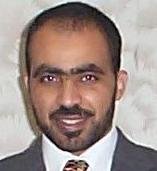
Dr. Fathalla Ali Rihan
Professor, Department of Mathematical Sciences, UAE University
Numerical Analysis, Biomathematics Mathematical Modeling in Immunology and Medicine, Parameter Estimations (Inverse Problem) and Sensitivity Analysis, Quantitative and Qualitative Features of Delay Differential Equations
About speaker
Professor D.Sc. Fathalla Rihan is Professor of Mathematics at the United Arab Emirates University (UAEU). He received his B.Sc. in Mathematics from Alexandria University in 1986, his Ph.D. from the University of Manchester, UK, in 2000, and his D.Sc. in 2018 for his contributions to delay differential equations and their applications. His research interests include numerical analysis, mathematical biology, and dynamical systems with memory, with applications to cell division, population dynamics, and infectious diseases. He has published over 120 research articles, presented at more than 100 international conferences, supervised numerous Ph.D. students, and authored the book Delay Differential Equations and Applications in Biology (Springer, 2021, 2026). He serves on editorial boards, reviews for leading journals and organizations, including the American Mathematical Society, and has led multiple research projects. He was ranked among the top 2% of researchers worldwide by Stanford University from 2019 to 2025, is a member of the Mohammed bin Rashid Academy of Scientists, and received the Khalifa Award for Distinguished University Professor (Cycle 18) in 2025 in recognition of his outstanding contributions to research and education.
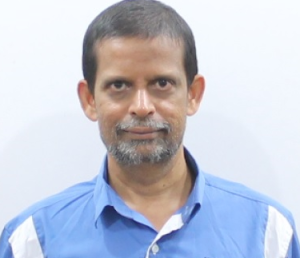
Dr. Ibrahim Venkat
Associate Professor, Universiti Teknologi PETRONAS, Malaysia
Artificial Intelligence, Biometrics, Data Analytics & Multi-Disciplinary Research, Uncertainty Modeling
About speaker
Dr. Ibrahim Venkat is an Associate Professor in the Department of Computing at Universiti Teknologi PETRONAS, Malaysia, and an honorary academic of the University of Kent, UK. Working under the umbrella of artificial intelligence, he has secured and successfully executed several research and consultancy projects funded by bodies such as the Authority for Info-communications Technology Industry (AITI) of Brunei Darussalam and the ministries of education in Brunei and Malaysia. He has guided several PhD scholars and published widely in journals and conferences. His honours include a Teaching Excellence award in Artificial Intelligence, the James Watt Scholarship, gold medals (Korea and Malaysia), the Scottish Technology Prize and several best paper awards.
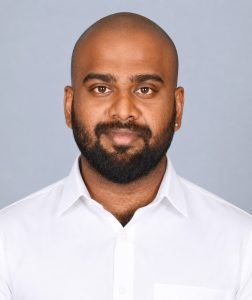
Dr. Kannadasan K
Assistant Professor, Department of Computer Science and Engineering, IIITDM Kancheepuram
Brain-Computer Interface, EEG Signal Processing, Affective Computing, Machine Learning
About speaker
Dr. Kannadasan K is an Assistant Professor at the Indian Institute of Information Technology, Design and Manufacturing (IIITDM) Kancheepuram, Chennai. His research focuses on brain-computer interfaces, EEG signal processing, affective computing and machine learning, with recent work on decoding emotional intelligence, personality and emotions from EEG, and on imagined speech recognition for BCI communication. He earned his PhD in Computer Science and Engineering from the National Institute of Technology Tiruchirappalli as a Prime Minister's Research Fellow, and has published in journals including IEEE Transactions on Instrumentation and Measurement, Knowledge and Information Systems and Biomedical Signal Processing and Control. His honours include the ACM India Anveshan Setu Fellowship and second prize in the Intel oneAPI Hackathon.
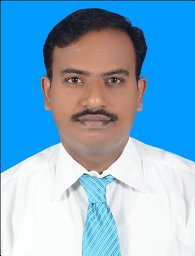
Dr. Kulandaivel M. P.
Lecturer, Mathematics Section, Department of Information Technology, UTAS–Al Mussanah
Graph theory, Fuzzy Set Theory, Image Processing and Artificial Intelligence
About speaker
Dr. M. P. Kulandaivel is a faculty member in the Mathematics Section, Department of Information Technology, at the University of Technology and Applied Sciences (UTAS), Al Mussanah, Sultanate of Oman. His research spans graph theory, fuzzy set theory, and applications of artificial intelligence and image processing. In graph theory he has worked extensively on domination parameters and connectivity of graphs, and his recent work includes fuzzy algebraic structures and deep-learning methods for image analysis, such as mask detection, social-distancing monitoring and night-vision image enhancement. He has published widely in national and international journals and conference proceedings.
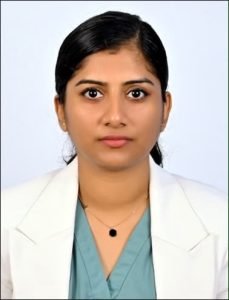
Dr. Lintu M. K.
Biostatistician, Sanofi, Hyderabad
Statistics, Survival Analysis, Deep Learning
About speaker
Dr. Lintu M K is a Biostatistician and NMA and ITC Lead (Real-World Evidence) at Sanofi. She holds a PhD in Biostatistics from Manipal Academy of Higher Education (2018 to 2024) and a master's degree in Statistics from Kannur University. Her work focuses on evidence synthesis, including network meta-analysis and indirect treatment comparisons, and on generating real-world evidence to support healthcare decision-making. Before joining Sanofi in 2023, she worked as a Real-World Evidence Research Analyst at Novartis.
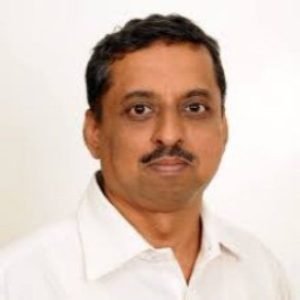
Dr. Manjunatha Prasad K
Professor, Centre for Advanced Research in Applied Mathematics and Statistics, MAHE, Manipal
Generalized Inverse of Matrices and their Applications, Covariance Matrices and Applications, Projective Modules and Matrices over Commutative Rings, Regular Rings, Partial Ordering of Matrices and Shorted Matrix, Matrices and graphs.
About speaker
Prof. K. Manjunatha Prasad is Professor of Mathematics in the Department of Applied Statistics and Data Science at the Prasanna School of Public Health, Manipal Academy of Higher Education (MAHE), Manipal, and Coordinator of the Centre for Advanced Research in Applied Mathematics and Statistics (CARAMS). He earned his PhD in Mathematics from the Indian Statistical Institute, Calcutta, in 1993, with a thesis on generalized inverses of matrices over rings. His research covers generalized inverses and their applications, covariance matrices, matrices over commutative rings, partial orderings of matrices, and matrices and graphs. He has more than 50 publications in reputed journals, serves on the editorial boards of several journals, including AKCE International Journal of Graphs and Combinatorics, and has been a guest editor for Annals of Operations Research and Special Matrices. He has organized numerous national and international conferences, workshops and lecture series.
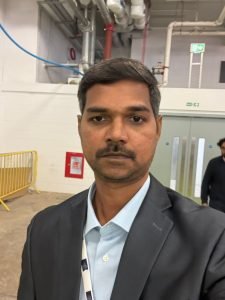
Dr. Murugadoss Jayaraman
Senior Director, AI and Platform Engineering, Six Red Marbles, Chennai
About speaker
Murugadoss Jayaraman is Senior Director of AI Platform & MLOps at Six Red Marbles, where he owns platform strategy for the AI Training Data Services vertical, including architecture, engineering standards and P&L accountability across teams in the USA, UK and India. With more than 21 years in enterprise engineering, product leadership and global delivery, he has spent the last two-plus years building production-grade generative AI platforms, agentic AI systems and MLOps infrastructure for EdTech and FinTech. His work spans RAG pipelines, multi-agent workflows, computer vision, and AI governance with human-in-the-loop review. He has represented the industry at events including the London Book Fair.
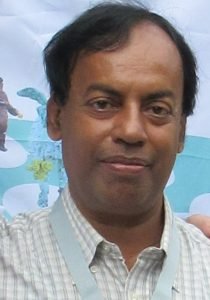
Dr. Neogy S. K.
Honorary Visiting Professor, Centre for Research on Economics and Data Analysis, ISI Delhi Centre
Matrix Analysis with applications in Optimization theory, Complementarity Problem, Nonlinear programming, Stochastic Games, Optimization problems in graph theory, Generalized Convexity and Combinatorial Optimization
About speaker
Prof. S. K. Neogy is an Honorary Visiting Professor at the Centre for Research on Economics and Data Analysis (CREDA), Indian Statistical Institute, Delhi Centre. He was previously Professor in the Statistical Quality Control and Operations Research (SQC & OR) Unit and served as Head of the Delhi Centre from 2019 to 2023. He holds a PhD from the Indian Statistical Institute. His research is in matrix analysis and its applications to optimization and game theory, including the linear complementarity problem, nonlinear programming, noncooperative and stochastic games, generalized convexity and combinatorial optimization. He has co-edited several volumes on mathematical programming, game theory and operations research, including titles in the ISI Platinum Jubilee Series, and has organized a series of international conferences and symposia on operations research and game theory at ISI Delhi.
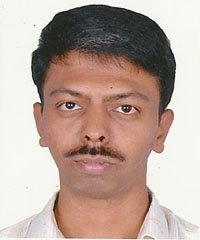
Dr. Panchatcharam Mariappan
Associate Professor, Department of Mathematics and Statistics, IIT Tirupati
Computational and Numerical Modelling, including Finite Element, Finite Volume, Meshfree and Lattice Boltzmann Methods
About speaker
Dr. Panchatcharam Mariappan is an Associate Professor in the Department of Mathematics and Statistics at the Indian Institute of Technology Tirupati, where he also served as Head of the Department (2021 to 2024). His research is in computational and numerical modelling, including finite element, finite volume, meshfree and lattice Boltzmann methods, with GPU acceleration. He applies these to bioheat transfer and minimally invasive cancer treatment, such as radiofrequency and microwave ablation, and to fluid flow and phase-change problems. He earned his PhD from IIT Madras in collaboration with TU Kaiserslautern, Germany, and worked at Fraunhofer ITWM and NUMA Engineering Services before joining IIT Tirupati in 2018. He has contributed to European Commission-funded projects on simulation-based planning of cancer treatment and has been invited as a keynote speaker at several national and international conferences.
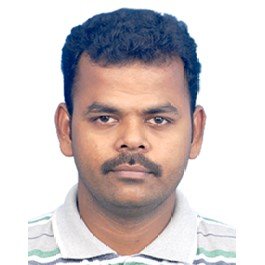
Dr. Rajesh Kannan
Associate Professor, Department of Mathematics, IIT Hyderabad
Combinatorics, Spectral Graph Theory, Matrix Theory, Functional Analysis, Pure Mathematics
About speaker
Dr. M. Rajesh Kannanis an Associate Professor in the Department of Mathematics at the Indian Institute of Technology Hyderabad. His research is in combinatorics, spectral graph theory and matrix theory, including current work on the spectral theory of signed graphs, funded by a Core Research Grant from ANRF, India. He earned his PhD in Mathematics from IIT Madras in 2014, was a postdoctoral fellow at the University of Manitoba, Canada, and served on the faculty of IIT Kharagpur before joining IIT Hyderabad in 2022. His honours include an Early Career Research Award from SERB and IIT Kharagpur's Excellent Young Teacher Award (2020). He regularly teaches at national instructional schools and short courses, including a GIAN course on spectral graph theory.
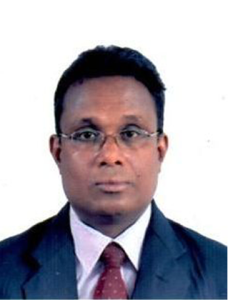
Dr. Sanjeewa Perera
Chair Professor, Department of Mathematics, University of Colombo
Epidemiological Modeling/Infectious Modeling/Dengue Modeling, Computational Biology, Epidemiological Models application in Actuarial and Financial fields, Optimization/Optimal Control/Fuzzy Logic based Modeling
About speaker
Prof. S. Sanjeewa Perera is Professor and Chair of the Department of Mathematics at the University of Colombo, Sri Lanka, and Director of its Centre for Mathematical Modelling. His research is in mathematical modelling, with a focus on epidemiological and infectious-disease modelling, particularly dengue, as well as computational biology, optimization and optimal control. He also applies epidemiological models in actuarial and financial fields. He holds a PhD in Optimal Control from the University of Colombo, completed through a DAAD sandwich programme with TU Kaiserslautern, Germany, and an MSc in Mathematical Modelling and Numerical Simulation from ICTP/SISSA, Trieste. He has authored 94 journal publications and five books, has supervised ten PhD students to completion, and has given keynote, plenary and invited talks at numerous conferences.
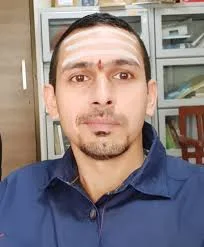
Dr. Sivaramakrishnan Sivasubramanian
Professor & Head, Department of Mathematics, IIT Mumbai
Matrix Theory, Graphs, Combinatorics, Combinatorial Optimization, Discrete Mathematics
About speaker
Prof. Krishnan Sivasubramanian is a Professor and Head of the Department of Mathematics at the Indian Institute of Technology Bombay. His research is in combinatorics, with a focus on matrix theory, graph theory, combinatorial optimization and discrete mathematics. His recent work studies matrices associated with graphs and trees, including distance matrices and Laplacian-type matrices, and the combinatorial structures that arise from them. He has published more than 25 research articles in national and international journals
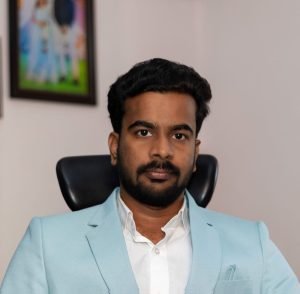
Mr. Xavier Prathap W.
Founder & CEO, Metaex Technology, Bangalore
About speaker
Xavier Prathap W is Director and CTO at Metaex Technology and co-founder of funso, a GenAI-powered EdTech platform. A data scientist and AI engineer with a master's degree in mathematics, he brings over a decade of experience in education technology and aptitude training. His work sits at the intersection of artificial intelligence, product building, and learning, with a focus on making technology practical and useful for real users.